Natural Fiber Rugs and Mats: Sisal, Palm Leaves, and Handmade Brazilian Home Décor
https://raffiaobjects.com/product-category/raffia-rug-lighting-basket
Natural fiber rugs and mats bring warmth, texture, and an authentic handmade feeling to interior spaces. Made from materials such as sisal, palm leaves, raffia, jute, seagrass, and other plant fibers, these pieces combine practical function with natural beauty.
A handmade natural fiber rug can define a room, create a welcoming entrance, protect a floor, or add a relaxed Brazilian touch to a modern home. Each piece has its own texture, color variation, and weaving pattern, making it different from factory-produced floor coverings.
How Are Natural Fiber Rugs and Mats Made?
The production of a natural fiber rug begins with selecting and preparing the plant material. The fiber must be cleaned, dried, separated, and prepared into strands, strips, or cords.
The artisan then chooses a technique according to the material and design.
Common production steps
- Selection of the fiber: The artisan chooses fibers according to strength, flexibility, thickness, and appearance.
- Cleaning and drying: Plant material is cleaned and dried to reduce excess moisture.
- Preparation: Fibers are separated into strands or cut into strips.
- Braiding or twisting: The strands may be braided, twisted, or formed into cords.
- Weaving or coiling: The artisan creates the rug using a loom, handweaving, braiding, or coiling techniques.
- Shaping: The rug is formed into a round, square, rectangular, oval, or irregular shape.
- Finishing: Edges are secured, loose fibers are trimmed, and the surface is inspected.
- Final quality check: The artisan checks the rug’s structure, texture, and overall appearance.
Some rugs are woven in a regular pattern, while others are created through hand-braiding or coiling. These techniques produce different levels of thickness, flexibility, and visual texture.
Because natural fiber rugs are handmade, small variations in color, shape, thickness, and weave are normal. These details help show the human work behind each piece.
Sisal Fiber Rugs and Mats
Sisal is a strong natural fiber obtained from the leaves of the agave plant. It is valued for its firm texture and durability, making it suitable for rugs, mats, baskets, and other home products.
Sisal rugs often have a structured appearance and a distinctive natural texture. They can be used in spaces where homeowners want a practical floor covering with an organic look.
Where sisal rugs work well
- Living rooms
- Home offices
- Bedrooms
- Hallways
- Entryways
- Covered balconies
- Rustic and farmhouse interiors
- Coastal and boho-style homes
Sisal can feel textured underfoot, so it may be especially appropriate in areas where a natural, structured surface is desirable. For homes with young children, elderly residents, or anyone sensitive to rough textures, it is useful to consider the fiber’s feel before choosing a rug.
Palm-Leaf and Palm-Fiber Rugs
Palm leaves and palm fibers are also used in traditional handmade crafts. Depending on the palm species and preparation method, the material may be woven into flat mats, braided rugs, or textured decorative floor coverings.
Palm-fiber rugs often have a light, relaxed appearance. Their natural tones work well with wood, cotton, linen, ceramics, rattan, and other organic materials.
Palm-fiber rugs are suitable for:
- Entryways
- Covered patios
- Bedrooms
- Living rooms
- Reading corners
- Beach-style homes
- Tropical interiors
- Natural and minimalist spaces
Palm-leaf mats can be especially useful in areas where a lightweight, decorative floor covering is desired. However, the specific durability of a palm rug depends on the type of palm, the weaving technique, the thickness, and the finish.
Other Natural Fibers Used in Rugs and Mats
Raffia
Raffia is valued for its flexible texture and handcrafted appearance. Raffia rugs can bring a warm, artistic, and tropical feeling to a room.
Jute
Jute is commonly used for braided and woven rugs. It usually has a soft, earthy appearance and works well in rustic, coastal, farmhouse, and boho interiors.
Seagrass
Seagrass has a natural, slightly firm texture and is often used for woven mats and rugs. It is popular in coastal and relaxed home décor.
Natural Grasses
Different grasses can be dried, braided, or woven into mats. These materials often create a simple, organic appearance that complements neutral interiors.
Detailed Care Guide for Natural Fiber Rugs and Mats
Natural fiber rugs are durable when used in suitable environments and cared for correctly. However, plant fibers can react to moisture, humidity, direct sunlight, friction, and heavy furniture.
1. Vacuum or Brush Regularly
Remove dust and loose particles with a vacuum cleaner using a gentle setting. If possible, use a soft-brush attachment.
For delicate or loosely woven rugs, a soft broom or dry brush may be safer than strong vacuum suction.
Regular cleaning helps prevent dirt from settling deeply between the fibers.
2. Avoid Excessive Water
Do not soak a natural fiber rug or use large amounts of water during cleaning. Moisture can cause some fibers to swell, weaken, stain, change shape, or develop mildew.
For small spills, use a clean, slightly damp cloth and gently blot the affected area. Avoid rubbing aggressively because friction may damage the weave.
3. Dry Spills Immediately
Liquid should be removed as soon as possible. Place a clean, absorbent cloth over the spill and press gently.
Do not leave the rug wet for an extended period. After cleaning, allow it to dry completely in a ventilated area.
4. Avoid Harsh Cleaning Products
Strong bleach, abrasive cleaners, solvents, and highly concentrated detergents may discolor or weaken natural fibers.
Before using any cleaning product, test it on a small, hidden area—or follow the care instructions supplied by the artisan or seller.
5. Protect the Rug From Constant Humidity
Natural fibers can absorb moisture from the air. Avoid placing rugs in areas that remain wet or poorly ventilated.
Bathrooms, uncovered outdoor areas, damp basements, and locations near constant water exposure may not be suitable unless the specific rug is designed for those conditions.
6. Use a Rug Pad
A suitable rug pad can help:
- Reduce slipping
- Improve stability
- Protect the floor
- Reduce friction
- Help the rug maintain its position
- Add a little cushioning
Choose a rug pad that is compatible with the floor type and the rug’s construction.
7. Rotate the Rug
Rotate the rug periodically to distribute foot traffic and sunlight more evenly. This can help reduce uneven wear and fading.
8. Protect Against Direct Sunlight
Long periods of strong sunlight may gradually fade natural or dyed fibers. If possible, position the rug away from intense direct sunlight or use curtains and blinds during the brightest part of the day.
9. Avoid Dragging Heavy Furniture
Dragging furniture across a natural fiber rug can pull threads, stretch the weave, or damage the edges. Lift furniture carefully whenever possible.
Use protective pads beneath furniture legs to reduce pressure on the rug.
10. Keep Pets’ Nails Trimmed
Sharp pet claws can catch on braided, woven, or looped fibers. Keeping pets’ nails trimmed can help reduce accidental pulls and snags.
11. Store the Rug Correctly
If you need to store a natural fiber rug:
- Clean it before storage.
- Make sure it is completely dry.
- Roll it instead of folding it when the material allows.
- Keep it in a cool, dry, ventilated place.
- Avoid sealed plastic bags if moisture could become trapped.
- Do not place heavy objects on top of it.
12. Check the Edges Regularly
Inspect the borders and corners from time to time. If you notice a loose strand, do not pull it. Carefully secure it according to the rug’s construction or ask a professional artisan for advice.
Where Can Customers Use Natural Fiber Rugs and Mats?
Natural fiber rugs are versatile and can be used throughout the home.
Living Room
A large natural fiber area rug can help define the seating area. Place it beneath a coffee table or in front of a sofa to create a warmer and more cohesive space.
Sisal, raffia, and braided rugs work well with:
- Wooden furniture
- Neutral sofas
- Linen cushions
- Handmade ceramics
- Woven baskets
- Natural wood accessories
Bedroom
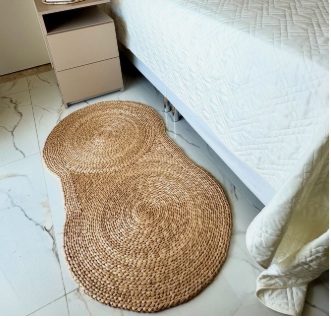
A natural fiber rug can add texture beneath the bed or beside a nightstand. Smaller mats are useful beside the bed, where they create a comfortable transition between the floor and the sleeping area.
Entryway
A woven mat at the entrance can create a welcoming first impression. It may also help collect some dirt from shoes, depending on the weave and construction.
For outdoor entrances, select a material specifically suitable for weather exposure.
Hallway
A long, narrow natural fiber runner can add visual continuity to a hallway. Make sure the runner is stable and does not create a tripping hazard.
Home Office
A natural rug beneath a desk or chair can soften the appearance of the room. However, rolling office chairs may create friction and wear, so a protective floor mat may be necessary.
Dining Room
A natural fiber rug can visually frame a dining table. Choose a sufficiently large rug so that chairs remain on the rug when pulled away from the table.
Food and liquid spills are more likely in dining areas, so consider the rug’s cleaning requirements before choosing it.
Covered Balcony or Sunroom
Palm, raffia, and other natural-fiber mats can complement plants, wooden furniture, and tropical décor in a covered outdoor space.
Avoid placing them in areas exposed to constant rain or strong humidity unless the product is specifically designed for outdoor use.
Nursery and Children’s Rooms
Natural fiber rugs can add texture and warmth to a child’s room. Select a rug with a stable surface, secure edges, and a texture appropriate for children who play on the floor.
Bathroom
Natural fiber mats may be used in some bathrooms, but continuous humidity and water exposure can damage many plant fibers. Keep the mat away from standing water and allow it to dry thoroughly.
Plant Corners
A natural fiber mat beneath a group of plants can create a beautiful botanical display. Always use waterproof saucers or trays to prevent water from reaching the rug.
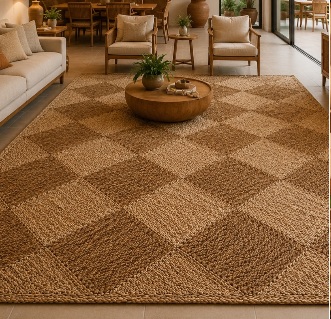
Natural Fiber Rugs for Different Décor Styles
Boho Décor
Choose braided, fringed, or textured rugs to create a relaxed, layered atmosphere.
Coastal Décor
Palm, seagrass, and light-colored natural fibers pair well with white, beige, sand, and soft blue tones.
Farmhouse Décor
Sisal and jute-style rugs complement wood furniture, neutral fabrics, and rustic accessories.
Japandi Décor
Simple shapes, subtle textures, and natural colors work well with clean-lined furniture and uncluttered spaces.
Tropical Décor
Raffia, palm fiber, and other plant-based materials can add a warm Brazilian or tropical character to the room.
Organic Modern Décor
A natural fiber rug can soften modern furniture and introduce contrast through its handmade texture.
Bring Natural Brazilian Craftsmanship Into Your Home
Natural fiber rugs and mats are practical décor pieces with a strong connection to traditional craftsmanship. Whether made from sisal, palm leaves, raffia, jute, or other plant fibers, each rug brings its own texture, color, and personality.
A natural fiber rug can define a living room, welcome guests in an entryway, add comfort beside a bed, or bring an organic feeling to a balcony or reading corner.
At Raffia Objects, handmade Brazilian décor celebrates the beauty of natural materials and the skill of artisans. By choosing a natural fiber rug or mat, customers can add warmth, texture, and an authentic handcrafted touch to their homes.
Explore handmade natural fiber rugs and mats at Raffia Objects and bring Brazilian artisan character into your space.