Brazilian Clay Art: From Earth to Handmade Religious Sculpture
https://raffiaobjects.com/product-category/religious-spiritual-statues
Brazilian Clay Art: From Earth to Handmade Religious Sculpture – Clay may look like a simple natural material, but in the hands of an experienced artisan, it can become something remarkably expressive.
A piece of earth can be transformed into a human figure, a religious image, a floral ornament, an animal, a decorative object, or an elaborate sculpture filled with movement and detail.
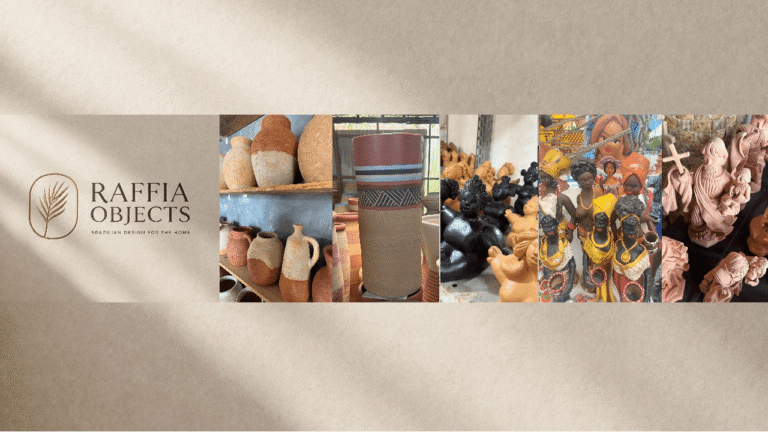
Brazil has a rich tradition of handmade ceramic and clay work. Over generations, artisans have developed techniques for preparing, shaping, decorating, drying and firing clay, while passing knowledge and craftsmanship from one generation to the next.
The result is more than an object for the home.
It is handmade art connected to people, memory, culture and tradition.
Religious clay sculpture is one of the most beautiful expressions of this relationship between clay, faith and artistic craftsmanship.
The Long Tradition of Working With Clay in Brazil
The history of ceramics in Brazil is much older than modern decorative trends.
For generations, Brazilian artisans have worked with clay to create practical objects, decorative pieces, artistic figures and religious representations.
Traditional craftsmanship is not simply a technique learned from a manual.
It can involve observation, practice, family teaching, experience and years of working with the material.
An experienced artisan learns how clay behaves during modeling, drying and firing. These skills develop through repetition, patience and close attention to the material.
That is why handmade Brazilian clay art can have such a distinctive character.
Two sculptures made from clay may represent a similar subject but still have completely different expressions.
The artisan’s hands leave their own signature.
How Is Brazilian Clay Sculpture Made?
Creating a detailed clay sculpture is a gradual process.
The final sculpture may look effortless, but there can be many stages between raw clay and finished artwork.
1. Selecting the Clay
The process begins with the material.
Clay must have characteristics that allow the artisan to shape it while maintaining enough structural integrity during drying and firing.
The material is carefully selected and prepared according to the type of artwork being created.
This first stage is extremely important because the characteristics of the clay influence the final result.
2. Preparing the Clay
Raw clay generally needs preparation before it can become a sculpture.
The artisan works the material to achieve a more consistent texture and may remove unwanted material or air pockets.
Proper preparation makes the clay easier to model and helps create a stronger, more stable piece.
The exact preparation process can vary according to the type of clay, the artwork and the artisan’s traditional techniques.
Every pottery tradition has its own knowledge.
3. Building the Sculpture
This is where the artisan’s creativity becomes visible.
Clay can be shaped by hand, added in sections, pressed, carved, modeled or combined with smaller decorative elements.
For a religious sculpture, the artisan may need to create:
- The face and facial expression
- Hair
- Hands and fingers
- Clothing
- Drapery and folds
- Decorative borders
- Flowers
- Animals or symbolic elements
- Bases and architectural details
- Small ornamental elements
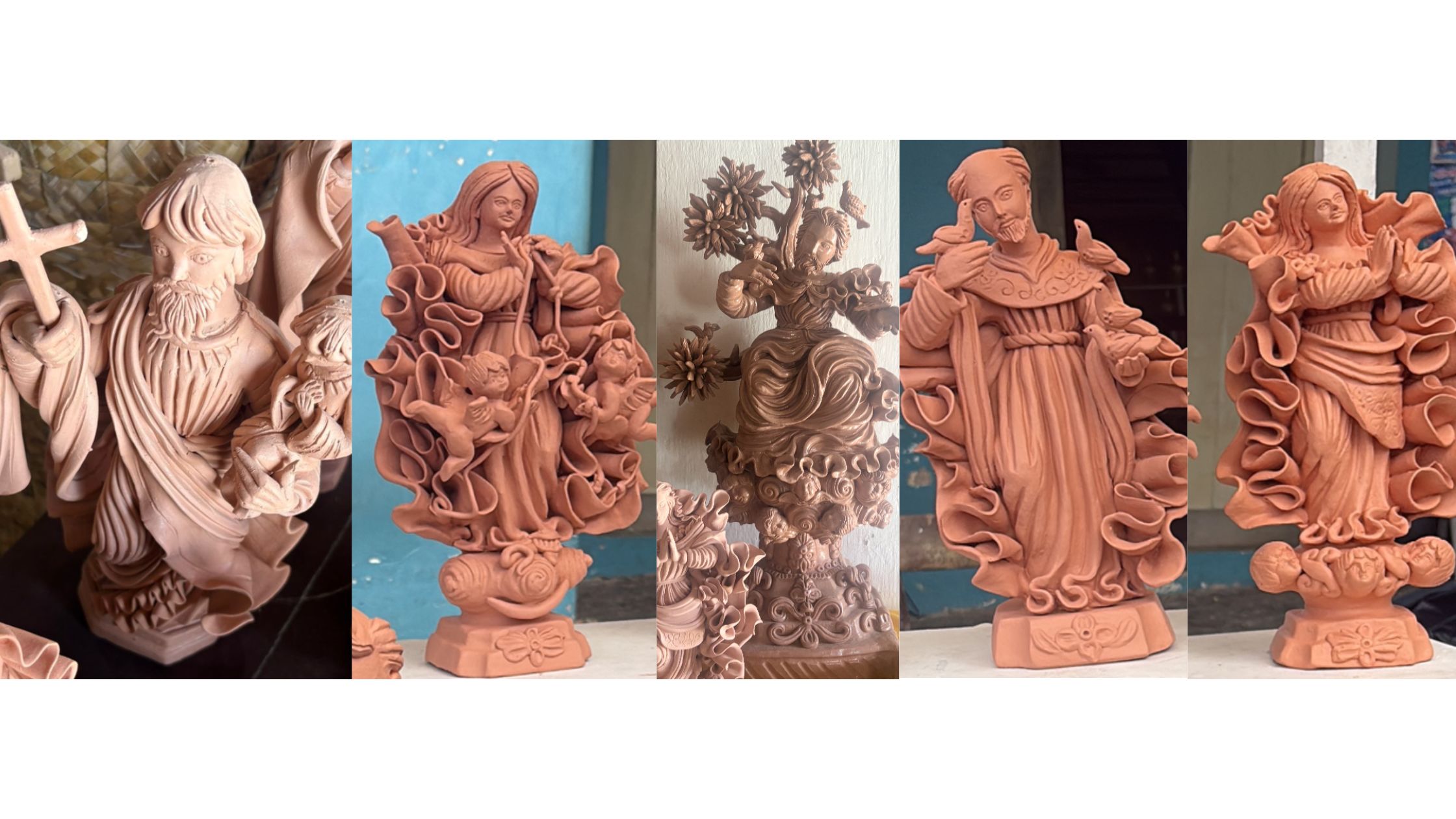
The photograph accompanying this article is a beautiful example of this level of detail.
Notice the numerous individual elements in the sculpture—the flowing clothing, flowers, hands, facial features, ornamental base and small decorative figures.
These details require patience, precision and control.
Why Religious Clay Art Is So Important
Religious art has played an important role in Brazilian cultural history.
Brazilian religious imagery includes Catholic devotional art as well as artistic traditions connected to different religious and cultural expressions.
Religious sculpture can serve several purposes.
It can be:
- A devotional object
- Part of a home prayer space
- A church or chapel decoration
- A family heirloom
- A representation of faith
- A cultural artwork
- A handmade decorative sculpture
- A connection to family and community traditions
This makes religious clay sculpture different from ordinary mass-produced decoration.
For many people, the meaning of the sculpture is just as important as its physical beauty.
A religious sculpture can represent faith, memory, devotion and tradition while also being appreciated as a handmade work of art.
The Beauty of Handmade Religious Clay Sculptures
Look closely at a handmade sculpture and you may notice something that factory-produced decoration often lacks:
small differences.
A handmade face may not be perfectly symmetrical.
A flower may have a slightly different shape from another flower.
The folds of clothing may vary.
The surface may contain subtle marks from the artisan’s hands.
These characteristics are not necessarily imperfections.
They can be evidence of the handmade process.
The photograph used for this article illustrates exactly this type of elaborate craftsmanship.
The sculpture combines figurative elements with highly detailed floral and ornamental decoration, creating a piece that feels almost architectural in its complexity.
From Clay to Fire: Drying and Firing
Once a sculpture has been shaped, it cannot immediately go into the final stage.
The clay must dry carefully.
This is an important part of the process because excessive moisture can create problems during firing.
Depending on the type of ceramic work and the traditional technique being used, firing can transform soft clay into a much harder and more durable ceramic material.
Temperature, timing, clay composition and firing method all influence the result.
This is why firing is not simply a matter of putting the sculpture into an oven.
It is a technical stage that requires knowledge, patience and experience.
The artisan must understand how the material reacts to heat and how the finished sculpture should be handled throughout the process.
Religious Sculpture and the Details That Tell a Story
One of the most fascinating characteristics of religious clay art is the use of visual details.
Clothing can communicate a period or artistic tradition.
A gesture can represent prayer, blessing or devotion.
Flowers can create movement and symbolism.
Animals can appear as decorative or symbolic elements.
A carefully modeled face can give the sculpture an emotional presence.
And the base can become an important part of the artwork itself.
In the example shown in the photograph, the sculpture has an elaborate base filled with ornamental forms, while the central figure is surrounded by flowers and flowing decorative elements.
The result is not simply a statue.
It is a composition.
How to Care for Handmade Clay and Ceramic Sculptures
Handmade clay sculptures deserve careful handling.
Whether your piece is religious art, a decorative figure or another type of Brazilian clay artwork, good care can help preserve its appearance for many years.
1. Dust Regularly
Use a soft, dry microfiber cloth or a very soft brush.
For highly detailed sculptures, a soft artist’s brush can help remove dust from small areas without putting pressure on delicate decorations.
Avoid using hard brushes or abrasive materials.
2. Avoid Excess Water
Do not soak a decorative clay sculpture.
Unless the artisan specifically states that the piece is designed for washing, avoid running water over it.
A slightly damp cloth may be appropriate for some finished ceramic surfaces, but always use minimal moisture and dry the piece afterward.
3. Be Careful With Small Details
Flowers, fingers, leaves, ornaments, thin decorative borders and other projecting elements can be fragile.
Always support the sculpture from its strongest areas when moving it.
Never lift a large sculpture by a delicate decorative element.
4. Keep It Away From Extreme Conditions
For indoor decorative sculptures, choose a stable location away from:
- Excessive humidity
- Prolonged direct sunlight
- Extreme temperature changes
- Open flames
- Areas where the sculpture can easily be knocked over
A stable shelf, console, cabinet or dedicated display area can provide a safer environment.
5. Handle Large Sculptures Carefully
Large handmade sculptures can be surprisingly heavy.
When moving one, use both hands and support the base.
For very large pieces, two people may be necessary.
Never drag a sculpture across a table or floor because the base can be damaged.
How to Display Religious Clay Art at Home
A handmade religious clay sculpture can become the focal point of a room.
Consider displaying it on:
A Living Room Console
A large sculpture can create a strong artistic focal point above or beside a console.
A Dedicated Prayer Space
For devotional pieces, a small table, shelf or dedicated prayer area can create a meaningful display.
An Entryway
A sculpture can introduce guests to your appreciation for Brazilian handmade art as soon as they enter your home.
A Bookshelf
Smaller clay figures can be displayed alongside books, plants and other handmade objects.
A Collector’s Display
For people who collect Brazilian folk art, ceramic sculptures can be combined with other handmade pieces to create a personal cultural collection.
Handmade Clay Art vs. Mass-Produced Decoration
There is an important difference between buying an object manufactured in thousands of identical copies and purchasing a handmade sculpture.
A handmade piece may contain:
- Individual variations
- Artisan fingerprints and modeling characteristics
- Unique proportions
- Slight surface differences
- Handmade decorative details
- A connection to the artisan’s individual craftsmanship
These characteristics give the object individuality.
Mass production aims for repetition.
Handmade craftsmanship allows individuality.
When you purchase handmade Brazilian art, you are not simply purchasing material.
You are bringing the result of human knowledge, practice and creativity into your home.
Why Traditional Clay Knowledge Should Be Preserved
Traditional craftsmanship can become difficult to maintain when fewer people learn the techniques or when handmade production becomes economically challenging.
Preserving traditional craftsmanship means preserving knowledge about materials, tools, techniques and artistic expression.
This is particularly important because traditional craftsmanship is often learned through practice.
An experienced artisan teaches another person how the material behaves.
How much pressure should be used?
How should a form be supported?
When is the clay ready?
How should a decorative element be attached?
How should the piece dry?
How should it be fired?
These are skills that can take years to develop.
The tradition survives when knowledge continues to move from one generation to the next.
Brazilian Religious Clay Art for the Modern Home
Traditional Brazilian clay sculpture does not have to live only in traditional interiors.
Today, handmade clay art can work beautifully with many decorating styles.
Rustic
Combine clay sculptures with natural wood, linen and earthy colors.
Boho
Mix handmade ceramics with woven baskets, natural fibers, plants and textiles.
Organic Modern
Use one sculptural clay piece as a strong focal point against neutral walls and simple furniture.
Coastal
Combine natural clay with light woods, woven textures and natural fiber décor.
Traditional
Display religious sculptures alongside paintings, books, antiques and family objects.
The contrast between an old-world handmade technique and modern interior design can make the artwork even more interesting.
Clay Is More Than a Material
Clay begins as earth.
Through human knowledge, it becomes form.
Through drying and firing, it becomes something durable.
Through the artisan’s imagination, it becomes art.
And when that art represents faith, devotion, history or cultural identity, its meaning can become even deeper.
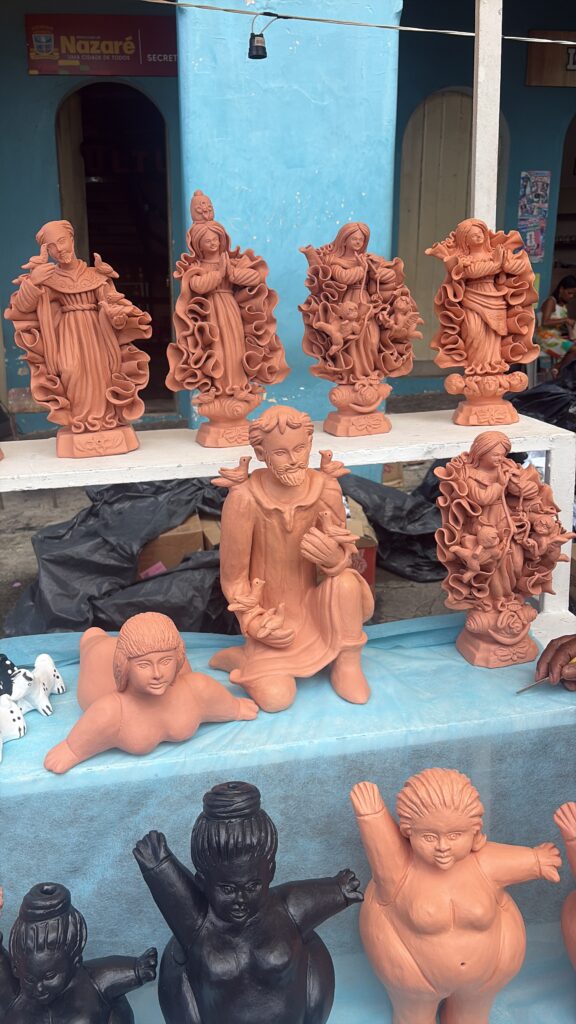
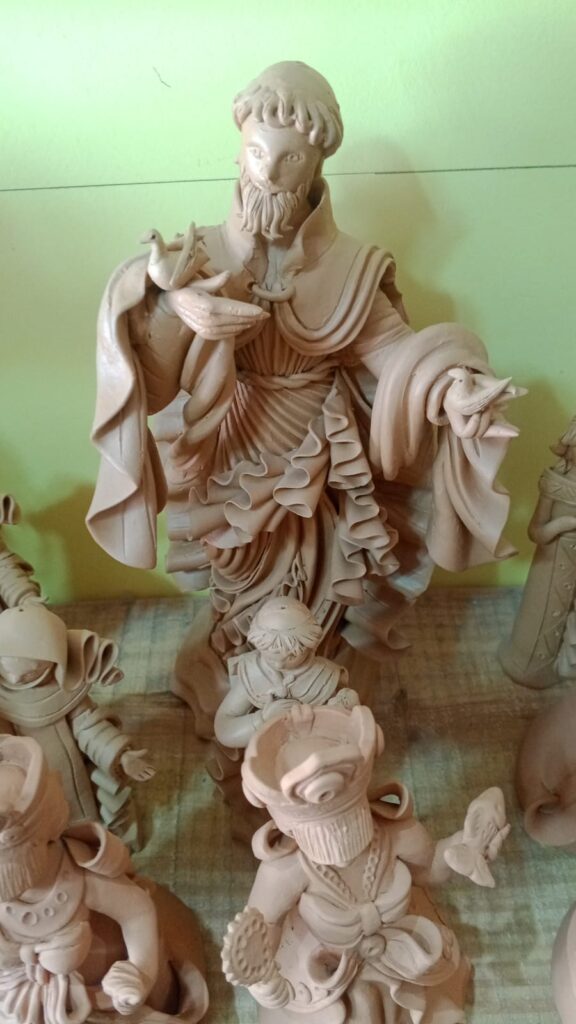
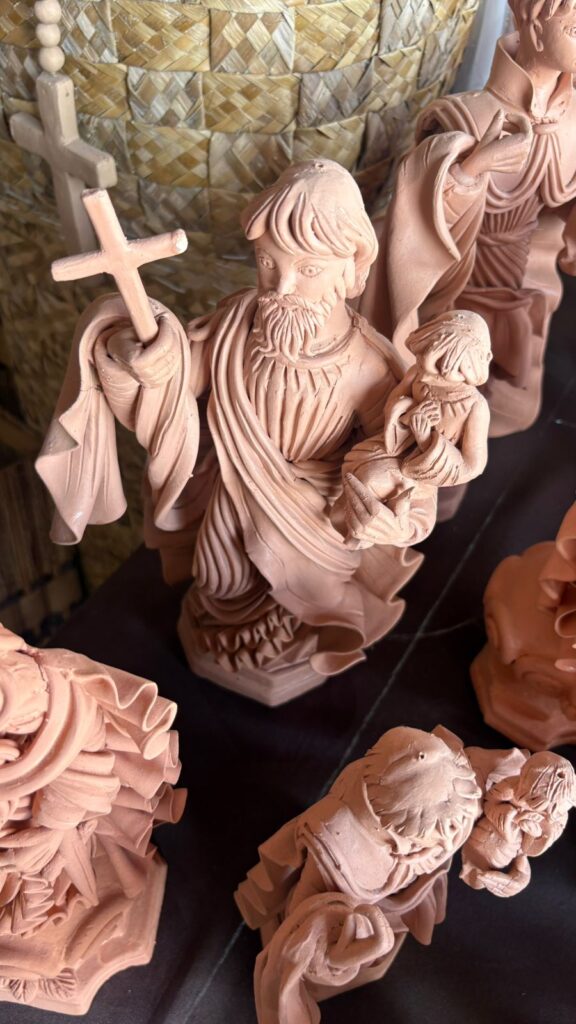
The religious clay sculptures shown in this article demonstrate how much detail and patience can exist inside a single handmade object.
Every flower, fold, hand, face and ornament represents another moment in the artisan’s work.
That is the beauty of Brazilian handmade clay art.
It carries the material of the earth, the knowledge of the artisan and the story of a cultural tradition into the home.
Discover Brazilian Handmade Clay Art
At Raffia Objects, we believe Brazilian handmade art deserves to be seen, understood and appreciated—not only as decoration, but as a connection to the artisans and traditions behind each piece.
Our collection of Brazilian clay sculptures and handmade objects brings together pieces inspired by Brazilian culture, religious traditions, everyday life and artisan craftsmanship.
Whether you are looking for a religious clay statue, Brazilian ceramic sculpture, handmade decorative figure or unique artisan artwork, a handmade piece can bring warmth, history and personality to your home.
Explore Brazilian clay art and discover the story behind handmade craftsmanship.